When somebody you respect is apprehended, the first sensible concern is straightforward: exactly how do we obtain them out, and what will it set you back? The solution goes through two paths that appear comparable but run extremely in a different way. Money bail means you, or a person in your place, down payment the entire quantity established by the judge. Bail bonds, often called guaranty bonds, bring an accredited bail agent into the picture that guarantees the court you'll appear, in exchange for a nonrefundable cost. Both safe and secure release, yet the risks, timelines, and effects deviate in means individuals typically uncover only as soon as they are knee-deep in the process.
I have actually rested with family members suspending messed up savings at a prison home window and I've functioned situations where a midnight call to a bail bondsman made the difference between someone resting in the house or costs three additional weeks behind bars. Understanding the compromises upfront aids you pick the alternative that truly fits your scenario rather than the one that simply really feels fastest.
What bond is implied to do
Bail is a court's way of managing threat between arrest and last resolution. It is not punishment and it is not a tax. The judge sets a dollar number created to accomplish 2 goals. Initially, incentivize the accused to return for hearings. Second, protect public safety and security by keeping high-risk offenders captive when ideal. In method, the numbers differ commonly based on the territory, the cost, a person's background, and any legal schedules. For a low-level violation, bail may be $500 or the court might launch the individual by themselves recognizance. For a severe felony, bond can run into the tens or thousands of thousands, if it is supplied at all.
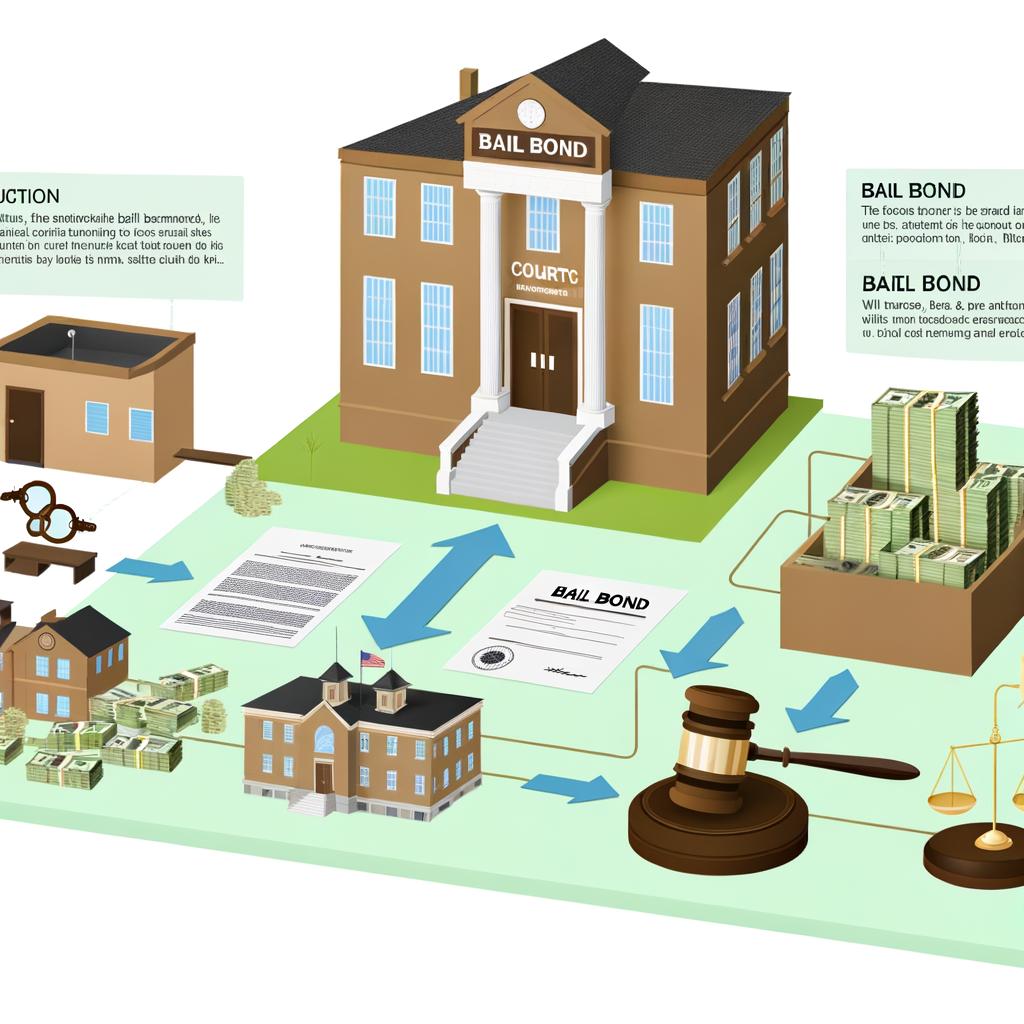
Once bail is set, you either pay the full amount straight to the court or you deal with a qualified agent that posts a surety bond. Both pathways end with the very same instant result: release from custody while the case progresses. Just how you arrive and what happens later are where the distinctions matter.
Cash bail in genuine terms
Cash bail is exactly what it sounds like. You deposit the whole bail amount with the court or prison. Many courts take money, certified check, or a cashier's check. Some territories now allow credit card payments with handling charges. When paid, the jail processes release, which can take anywhere from one hour to a full day depending on staffing and backlog.
If the accused appears for all required days and abides by problems, the court returns the money at the end of the situation. That "end" can take months. I've seen bonds bound for 18 months in slow-moving felony dockets also when the accused never misses out on a hearing. The return is not ensured completely. Courts deduct fines, charges, additional charges, and occasionally restitution from your money. If the person fails to appear, the court can maintain all of it. Getting it back after a missed out on court day typically calls for a motion, a hearing, and proof that the offender returned immediately or had a legally acceptable excuse.
People choose money bond for a straightforward factor: cost. If you have the total available, and you trust the offender to follow through, cash money bond can be the least expensive option over the life of the instance. You stay clear of paying a bondsman's cost. You prevent collateral issues. The trade-off is liquidity. Locking up $5,000 to $50,000 for months is not viable for the majority of households. And if unforeseen court costs ingest the refund at the end, the "complimentary" alternative ends up being much less free.
One a lot more sensible note: if a member of the family posts cash bond in their very own name and the court later on uses those funds to the accused's obligations, the poster often feels blindsided. The court watches those funds as the accused's security, not a family depend on account. If you can not afford to lose the whole quantity, do not place it up.
How bail bonds work
Bail bonds include a third party: a qualified bond representative who issues https://milocjdk945.iamarrows.com/how-to-get-ready-for-a-bail-hearing a surety bond to the court promising the defendant's look. The representative bills a costs, commonly 10 percent of the bail quantity in many states, often reduced for high bonds or with discount rates permitted by regulation. That premium is nonrefundable. You pay it whether the situation fixes in a week or a year, and whether every court day is best or not.
The bail bondsman assumes monetary danger. If the defendant stops working to appear, the court can forfeit the bond and need complete settlement from the guaranty business. To handle that threat, representatives perform a fast underwriting process. They ask about employment, house, co-signers, and connections to the area. They may call for collateral, such as a vehicle title or a lien on residential property, particularly for larger bonds. They also enforce conditions: routine check-ins, travel limitations, and prompt notice of any adjustment in address.
The useful advantages are rate and availability. I've protected releases at 2 a.m. on a Sunday by calling a bondsman that might publish within an hour. For households who can not pull together $20,000 in money, paying a $2,000 costs to a bail representative can be the difference between liberty and weeks in pretrial apprehension. The price is the costs itself, plus any charges for monitoring or digital check-ins, and possible direct exposure if the offender runs. If the individual absconds and the court forfeits the bond, the representative will certainly turn to the co-signers and collateral to make themselves whole.
A regular misunderstanding is that the bondsman's costs counts towards fines or gets reimbursed at the end. It does not. The premium is the cost for the service of risk-taking. If the offender shows up and the bond is exonerated, the contract ends. The cash paid to the agent does not come back.
Comparing price, risk, and control
The prompt numbers make the very first contrast clear. On a $10,000 bond:
- Cash bond needs $10,000 in advance, which you may recuperate months later on, minus court reductions. A bail bond typically sets you back concerning $1,000 in advance, nonrefundable, with feasible collateral.
That basic math misses crucial subtleties.
With cash money bail, you regulate your destiny extra straight. If the individual appears as needed, your money likely returns, and you avoid third-party involvement. Yet you birth the complete danger of a missed out on court look. Courts take care of failings to appear in manner ins which vary from forgiving to stubborn. In some counties, turning up the following day with guidance and a description recovers the bond. In others, the forfeiture ends up being permanent unless you fulfill stringent legal standards. And keep in mind, your money bond is an easy target for court costs.
With a bail bond, the risk of forfeiture originally falls on the guaranty, not you. Representatives are proficient at settling failings to appear quickly, because it is their money on the line. I have actually seen a bondsman drive a customer to court himself after a sick-day mix-up. Those connections can aid avoid loss and keep the accused on the right track. But if points truly go laterally and the bond is forfeited, the indemnitors on the bond agreement pay. That might be you or whoever co-signed. The agent might recover utilizing the collateral you pledged.
Control really feels different also. With cash bail, you are the poster however you do not have legal authority over the offender. You can not revoke the bond merely due to the fact that you are fretted. With a bail bond, agents usually reserve the right to give up a defendant back to safekeeping if they believe the risk has increased, for instance, if the individual quits checking in or grabs a new cost. That safety procedure lowers the guaranty's direct exposure, however it can surprise households who assumed launch was a one-way door.
Timelines, logistics, and what really happens at the jail
Process varies, but there is a typical rhythm. After arrest, the individual waits for a bond setup, commonly at an initial appearance within 24 to 48 hours. Some jurisdictions release a bail schedule so you can act before a court sees the instance. Once you understand the number:
If you pay cash money, you bring funds to the jail or court cashier. Expect identity verification, an invoice, and in some cases a different type that recognizes the individual uploading the bond. Keep every file. Release succeeds the jail confirms the repayment and look for holds from other jurisdictions.
If you make use of a bail bond, you authorize an arrangement with the agent, pay the costs, and supply any kind of security. The agent prepares the bond documents, in some cases with a power of attorney from the surety company, and posts it with the jail. In many regions, bonds post digitally despite the hour. In backwoods, somebody may physically provide the paperwork. Processing again takes time.
Either method, be patient. Evening and weekend break launches slow down when staffing is slim. Clinical clearance can delay things. If the individual has warrants in one more area, the prison may hold them awaiting transfer also if you publish bail locally.
Across multiple cases I've managed, the difference in between publishing cash and going through a bondsman often boiled down to hours as opposed to days. The longer hold-ups were triggered by the prison's queue or by various other holds, not by the settlement approach. The primary speed advantage of a bondsman is accessibility. Cashier windows close. Agents get the phone.
Situations where cash bond makes stronger sense
If you have the total without endangering your lease, utilities, or payroll, cash bail removes the cost and can simplify completion of the case. It is particularly attractive when the bail is small and the defendant has a constant performance history of following court dates. For instance, on a $1,000 bail for a misdemeanor theft instance, paying cash might tie up funds for only a few months. In many courts, those funds return in nearly complete, much less a hundred dollars or so in costs.
Cash also makes sense when you intend to avoid continuous oversight by a bail bondsman. Some individuals merely like not to add another layer of responsibilities like regular check-ins or take a trip authorizations. For a defendant with stress and anxiety or a night-shift work, the extra contacts can be burdensome.
There is a 2nd, less evident benefit to cash money bail. If the accused picks up new costs while out, a bondsman might surrender the person. With cash money bail, unless a court withdraws it, the cash does not instantly disappear and the person is not immediately returned to guardianship on the initial case. Certainly, the court can revisit bond at any type of time.
Situations where bail bonds solve more challenging problems
High bail numbers put squander of grab the majority of family members. On a $50,000 bail, tying up that amount for a year can be impossible even for well-resourced houses. A 10 percent costs of $5,000, while uncomfortable, may be viable with aid from good friends or a payment plan licensed by state law. Many agents approve deposits at finalizing as long as co-signers with solid credit history stand behind the agreement.
Timing matters too. Arrests that take place on Friday nights frequently accept Monday early morning court calendars. A bond agent working evenings can press a weekend break captive into a couple of hours. I remember a daddy who called me after his child, a first-year pupil, was arrested on a probation infraction with a $7,500 bail. A bail bondsman posted at 1 a.m. on Saturday. The apprentice made his Sunday change and maintained his task, which meant lease earned money and a spiral was avoided.
Bail bonds likewise supply structure. Some accuseds need the additional accountability. Normal check-ins, pointers, and the understanding that somebody is examining their shoulder lower missed out on appearances. Several agents I know use former probation officers who are superb at pushing clients to court and connecting them with bus passes or calendars.
Collateral and co-signers: what you are really promising
Bail bond agreements split individuals right into duties. The offender promises to appear. Indemnitors, usually friend or family, promise to pay if the bond is surrendered. Collateral secures that pledge. It can be money, a lorry, fashion jewelry, or real estate. The agent examines security based upon quick-sale worth, not sentimental worth or market price. A cars and truck with a tidy title could be enough for a $10,000 bond. A home can cover bigger bonds, but placing a lien is slow and could not be useful for urgent releases.
Co-signers must check out every line. You are responsible for the complete bond amount if the accused absconds and the guaranty can not recover the individual. Agents will try to alleviate, and many courts permit set-asides if the accused returns within a specified period, typically 90 days. Yet if points really fail, a judgment can land on the indemnitor. If you do not have clear boundaries with the offender, hesitate prior to vowing the family members minivan.
If a bail bondsman asks for security that really feels disproportionate, ask why. Occasionally the belt-and-suspenders technique shows a high-risk profile: new to the location, prior failings to show up, or thin job history. If you can bolster danger in various other methods, for instance by including a stronger co-signer or consenting to even more regular check-ins, representatives might reduce security requirements.
Failures to appear: what happens next
No-shows can be found in tastes. There is the overslept accusation that obtains repaired that mid-day. There is the anxiety-driven avoidance that spirals for weeks. There is the calculated effort to flee. Courts deal with each in different ways. Lawyers can often negotiate a quash and reset if the absence was brief and the accused appears willingly. Longer lacks require sworn statements and even more explanation.
With cash money bond, the court might start forfeit right away. Notifications head out, due dates pass, and the funds convert to the area's account. Turning around that course takes some time and lawful job. With a bail bond, the agent commonly gets a home window to produce the defendant before the forfeit ends up being final. That is why representatives move fast when a court date is missed. They call, they check out, and if required, they prepare a surrender. From the court's point of view, the system functioned, because the guaranty delivered the person.
Defendants need to recognize that a failing to appear can create a brand-new criminal fee, different from the original situation. That cost can be an offense or a felony, relying on the jurisdiction and the underlying case. It likewise darkens future bond decisions. Judges read documents. A string of missed out on dates shuts doors.
The policy backdrop and local quirks
Not all states manage this the same way. Some territories have actually approached pretrial launch structures that lessen money bond for low-level offenses, making use of threat analyses, reminders, and nonfinancial problems rather. Others count heavily on economic bail. In a few states, business Bail Bonds are not allowed, which suggests money bond or supervised release programs fill the room. If you are dealing with a situation near state boundaries, do not presume guidelines rollover. Also within a state, region practices vary. Urban courts might have pretrial services officers that can confirm employment and recommend launch with problems, while smaller counties count a lot more on bail schedules and traditional guaranty bonds.
Court costs additionally vary commonly. I have seen as little as a $25 management fee come off a returned cash bail. I have actually also seen several hundred bucks in fees and additional charges deducted. Ask the clerk about regular deductions before you decide.
Finally, settlement choices matter. Some courts approve third-party credit cards with a service charge that varies from 2 to 5 percent. While that can place cash money bail within reach for some households, those costs are not minor on huge amounts, and rate of interest can intensify if you carry an equilibrium for months.
The human side: tasks, children, and case outcomes
The most pricey part of pretrial apprehension is not the bond amount. It is the lost job, the missed child care, and the concrete manner ins which being locked up stress a person to accept a plea they may or else fight. Prosecutors and courts understand this vibrant, and many work vigilantly to stop unneeded apprehension. Still, the system moves miserably. Obtaining a person out swiftly can transform the whole instance trajectory. They reach meetings sharp and prepared. They gather pay stubs and letters for the court. They reveal the judge stability.

From that point of view, the "least expensive" course is the one that gets the defendant back to life with the least disruption. If money bond suggests waiting 3 more paychecks while the person sits in prison, consider the bondsman. If the premium would require you to avoid lease, ask advice concerning pretrial launch or a bail decrease hearing. Defense lawyer frequently protect lower bail or nonfinancial launch by providing employment evidence, family members support, and treatment plans. A lot of family members assume the initial bond is fixed. It is not. It is a beginning point.
Common mistakes and exactly how to stay clear of them
Families rush under stress and miss out on details. These are the mistakes I see usually:
- Paying cash money bond in the offender's name, after that uncovering the court used it to fines without consulting the household. Article in your very own name if you can, and ask exactly how reimbursements are processed. Signing a bail bond without checking out the problems. Clear up check-in schedules, travel limits, and the specific events that activate surrender. Ignoring the initial missed out on court day. Interact right away with guidance and the bondsman. Rapid activity can stop a loss and a new charge. Over-collateralizing as a result of panic. If an agent requires collateral much above the bond, shop around or include a stronger co-signer to minimize the requirement. Failing to inquire about pretrial launch alternatives. Judges sometimes allow digital surveillance or coverage instead of economic bail if offered a concrete plan.
Keep documents arranged. Court notices arrive by mail, e-mail, or both, and they do obtain lost. Develop a solitary folder for invoices, bond documents, and hearing days. Take an image of the court date and time. Share it with everybody that needs to understand, consisting of the employer who can readjust shifts.
Working with attorneys, clerks, and agents
Your defense lawyer is your navigator. Before you post anything, ask counsel to evaluate the probability of a bond decrease or a recognizance launch. In some courts, a brief hearing with a plan can reduce a $20,000 bond to $5,000 or transform it to supervised release. If you have already paid a bail bondsman, the premium is sunk. It is far better to wait half a day for a hearing than to lock in a charge unnecessarily.
Clerks are underappreciated resources. They know processing times, peak hours, and which home windows approve which forms of repayment. A courteous concern at the counter can save three hours of standing in the incorrect line. When paying cash bail, request for a receipt that clearly specifies that uploaded and where any refund will be sent. Confirm the mailing address in writing.
As for bail representatives, credibility issues. Opt for a certified company that describes terms in plain language and can indicate local referrals. Representatives that grab the phone after hours and that treat you like a consumer, not a suspect, alleviate a demanding process. Be wary of anyone who ensures results or assures special influence at the courthouse. Their work is to publish a bond and handle risk, not to guide the case.
How to pick: an easy choice frame
Focus on 3 questions.
First, can you comfortably front the complete bail for the most likely duration of the case, comprehending that the cash can be bound for 6 to 18 months and may be lowered by court costs? If yes, cash money bond might be your most affordable route.
Second, what is the accused's record and stability? If the individual has dependable transport, stable job, and a tidy look history, the threat of forfeiture is reduced. If the individual has actually had problem with court dates in the previous or remains in dilemma, the framework of a bail bond can be valuable, even after accounting for the premium.
Third, how urgent is launch? If hours matter for work or safety and security, and the court cashier is shut, a bondsman's 24/7 solution can shut the gap.
When unsure, pause and ask counsel whether a brief hearing may protect launch without either cash money or a bond. Pretrial services, guidance, and nonfinancial problems are tools courts make use of, especially for novice, low-risk defendants.
Final perspective
Cash bail and Bail Bonds are not ethical choices. They are tools for browsing a system that asks families to balance danger, expense, and time throughout a currently hard moment. Use the tool that fits your genuine constraints, not the one that looks great on paper. Regard the paperwork, because the paperwork is the process. Keep your expectations based, since courts work on schedules and rules that do not flex for panic. And keep in mind that your first job is not to purchase liberty, but to construct a plan that maintains the accused on the right track from launch to resolution. That plan, greater than the repayment technique, identifies whether you greet the staff months later on for a reimbursement, or describe to a judge why a bench warrant provided and the cash is gone.